
China’s most important traditional festival – the Spring Festival (February 15th) – is now in its countdown phase. For partners importing garlic from China, an important question arises: Is it best to place orders and arrange shipments before the Spring Festival?
This article will analyze three key areas: price trends, logistics efficiency, and cost control. It offers guidance for professional decision-making to help you reduce supply chain risks before the holiday.
I. Garlic Prices: Short-Term Price Increase Unlikely to Last, Slight Decline Expected Before the Spring Festival

Since January 10th, the Chinese domestic garlic market has seen a new round of price increases. This price surge comes from two main factors. First, there’s positive sentiment in the futures market. Second, a burst of pre-holiday stocking orders is boosting demand. Together, these elements are lifting the market from its earlier slump.
The current market structure hasn’t fundamentally changed, based on supply and demand. Industry stats show the garlic planting area for 2026 will rise to 12 million mu. The yield per mu might drop a bit due to late planting. Still, total output is expected to hit around 15.95 million tons, similar to last year.
Inventory levels are key. In early December 2025, cold storage garlic inventory was 67%, or about 3.49 million tons. Adequate inventory levels will help keep prices stable. The market doesn’t have what it needs for a long-term rise.
The core variable in future price trends will focus on the growth of garlic seedlings in the fields. Excessive rainfall in key growing areas last autumn delayed garlic planting. This led to major differences in seedling growth. In Jinxiang, Shandong, a key garlic area, early-planted seedlings have 8-9 leaves and grow well. Late-planted seedlings have just 3-5 leaves. This shows weaker growth and less cold resistance. If temperatures drop a lot in February, late-planted seedlings will face a serious risk of frost damage. This could impact the yield for the new season.
In summary, this short-term surge in garlic prices lacks sustainability. Since January 20th, market prices have stabilized, and a slight decline is expected before the Spring Festival.
II. Logistics and Transportation: Tight Capacity and Increased Risk of Shipping Delays Before the Spring Festival
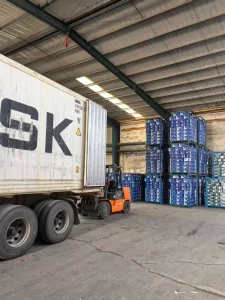
The time before the Spring Festival is a busy period for domestic logistics and transportation. During this season, capacity is tight, and turnaround efficiency drops significantly.
As the Spring Festival nears, port workers will start going home. This means fewer workers for loading, unloading, customs, and inspections. So, work shifts will shrink, and cargo handling will slow down. If goods arrive at the destination port during the Spring Festival, expect delays. Customs clearance may take longer because there aren’t enough port workers. This could also mean missing shipping dates and disrupting your inventory schedule.
III. Cost Control: Rising Labor and Transportation Costs Squeeze Profit Margins

(1) Soaring Transportation Costs
Logistics companies often charge peak season surcharges before holidays. This can raise sea freight rates. Domestic short-haul transportation costs will rise. This will directly increase overall logistics costs for goods.
(2) High Labor Costs
Overtime from loading and unloading crews and customs brokers leads to high pay for companies. Hiring extra staff temporarily is also expensive. Also, faster customs clearance and inspection need extra service fees. This raises operating costs even more.
My country’s official Spring Festival holiday is from February 14th to February 24th. However, factory workers typically leave work early to buy New Year’s goods and prepare for the festivities. This causes a labor shortage in factories before the holiday. As a result, production efficiency drops, which leads to higher labor costs per product.
There is also a delay in workers returning to work after the holiday. Usually, the factory’s return-to-work rate is about 25% in the first week after the holiday. Full staffing and production at capacity happen in the second week.
IV. Procurement Recommendations

Based on the above analysis, the following conclusions can be drawn:
1. If you plan to order garlic before the Spring Festival, the next two weeks are the optimal window. As the Spring Festival nears, more random factors in logistics and production will occur. These issues will likely cause shipping delays, local transport disruptions, and production stalls.
2. If you think prices are too high and plan to buy after the Spring Festival, plan ahead. Factories won’t fully restart production or shipping until the first or second week of March.
We suggest that you look at local consumer demand and your inventory turnover. This will help you plan your garlic buying and shipping. By doing this, you can reduce supply chain risks before the Spring Festival and keep your business running smoothly.