
Garlic is considered a must-have ingredient in many Asian recipes. However, garlic consumption is even more pronounced in Southeast Asia. Interestingly, countries from these regions produce garlic, but in very small quantities. That’s why the Southeast Asian garlic market relies heavily on imports.
Remember, Indonesia produces garlic. However, locally produced garlic is insufficient to meet the country’s demand. Other countries, such as Vietnam and the Philippines, also import from China. In this article, I will discuss the demand and supply of garlic in Southeast countries.
What Does Market Demand Mean?
Market demand is an important key factor in analyzing the demand for a specific product in a country. If people consume more of a product (such as garlic), its demand will be high. If demand for garlic is high, its price will increase, especially if the country does not produce it on a large scale. In other words, market demand involves analyzing the production and consumption of garlic.
Countries that don’t produce garlic import it from other countries, including China. Shipping fees, import taxes, and other costs ultimately increase the price of garlic in those countries. On the other hand, if a country produces enough garlic, it will easily meet its demand. As a result, prices remain stable. The market demand for garlic depends on two major factors, including:
- Population of the country
- People’s dependence on that product
If a country has a high population, it will need large quantities of different products, including garlic. This will eventually increase the demand, and the country will have to import if it does not produce enough. Similarly, if people depend more on specific products, demand will also increase. For example, people in Southeast Asia use garlic in their cooking.
This means they are dependent on it and consume it in large amounts. As a result, the demand for garlic in Southeast Asia is very high. However, garlic production in these countries is low, leading to imports from China and other countries. Remember, China produces about 70-80% of the world’s garlic, meeting the garlic needs of various countries in Southeast Asia.
Garlic Market Analysis of Southeast Countries

Demand for garlic increases when countries consume more and produce less garlic. That’s the case in almost every Southeast Asian country. In the section below, I will discuss the demand and supply of garlic in every Southeast Asian country.
1- Garlic Demand & Supply in Indonesia
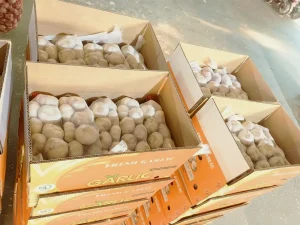
Indonesia is one of those Southeast Asian countries where the weather is generally hot and humid. Unfortunately, garlic requires specific conditions for optimal growth. These include no humidity, cooler weather, and fertile land. Indonesia does not have perfect weather, but it has fertile land. Farmers in this country prefer growing rice and vegetables rather than garlic. Why?
The reason is that rice crops are generally more profitable, and fertile land is also well-suited to rice. Garlic production in Indonesia is very low, at around 39.4 thousand tonnes per year. This is per the 2024 stats, and production is continuing to decline. In contrast, the garlic demand in Indonesia is roughly around 600,000 tonnes per year.
The reason is that Indonesian people use garlic as their primary food commodity. It is used in different recipes—even large restaurants use it to improve the taste of their dishes. This high demand drives countries to import large quantities of garlic from various countries. In fact, Indonesian garlic imports account for almost 24% of global garlic imports.
The major garlic exporter to Indonesia is China, which produces large quantities. Apart from China, this country also imports from other countries, including India. This dependence on other countries makes garlic prices in Indonesia very unstable. Recently, the government has launched an initiative to support local garlic production.
2- Garlic Demand & Supply in the Philippines
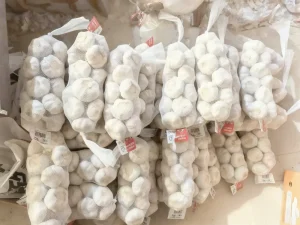
The Philippines is another Southeast Asian country that relies on imports to meet its garlic needs. Like Indonesians, the Filipinos also use garlic in cooking. For example, dishes such as adobo and sinigang rely heavily on garlic for their flavor and aroma. These dishes are considered part of household cooking and are also available at the restaurants.
High consumption has increased the Philippines’ garlic imports to around 90,000 metric tons per year. However, garlic production in those countries is very low. In fact, this production has declined over the years. For example, garlic production in the Philippines was around 20 thousand metric tons per year in the 1990s.
However, this production has been in decline, reaching only about 5.4 thousand metric tons in 2024. That’s why Filipinos import over 90% of their garlic from other countries such as China and Hong Kong. It is worth noting that garlic production in the Philippines is not only low but also very expensive. Why? The reason is that this country lacks the modern equipment and technology to grow garlic.
Farms rely on manual labor, increasing labor costs. That’s why garlic produced in the Philippines is even more expensive than imported garlic from China. As a result, Filipinos prefer buying imported garlic rather than locally produced garlic because it is more expensive. Due to limited technology, garlic production in the Philippines might decline further.
3- Garlic Demand & Supply in Vietnam

As I said earlier, garlic crops require cooler weather (temperatures around 22–25 degrees Celsius). Vietnam partially meets this criterion, and the temperature in Vietnam is around 25 degrees Celsius. Still, this country struggles to produce enough garlic to meet demand. The reason is that rain is very common in this country.
The quality of garlic is highly affected by the consistent rains. It causes various diseases in garlic crops, including root rot. These diseases reduce bulb size and greatly affect quality. As a result, farmers incur significant losses rather than making profits. So farmers don’t prefer growing garlic, leading to heavy imports from other countries.
In 2023, Vietnam imported about 54,000 tonnes of garlic primarily from China. Looking ahead, Vietnam does not seem ready to meet the country’s growing needs. That’s mainly because the weather is becoming less favorable for growing garlic. However, the demand for garlic is increasing in this country as people use it as a cooking ingredient.
Remember, population growth is also driving this demand ever higher. Ultimately, Vietnam has to look to China for importing a major portion of its garlic to keep its prices low. Remember, Chinese producers use modern technologies to grow garlic on a large scale. As a result, they can export their garlic to different countries.
Conclusion
It is worth noting that increased demand for garlic in these countries creates new business opportunities. How? You can import garlic from China, which is cheaper, and then sell it in these countries. The deal becomes even more attractive if you’re from any country in the southeast. We at Fenduni Garlic are a dedicated supplier of garlic from China. You’ll get both purple and white garlic from us at very affordable prices. You can then sell this garlic to specific countries and take your business to the next level.