
Garlic is used in almost every kitchen. However, when you see the garlic labeled “Made in China,” you must wonder: Is Chinese garlic safe? This question has now become more common due to claims about pesticides, chemicals, and even sewage irrigation. But not every claim you read online tells the full story. Chinese garlic is exported to many countries, and imported food must follow the safety rules of the country where it is sold. To make it clearer, in this guide I will discuss Chinese garlic safety standards. So let’s get started.
What Are Chinese Garlic Safety Standards?
Chinese garlic safety standards are rules that ensure garlic is safe, clean, and suitable for people to eat. These standards include all stages: growing, harvesting, processing, packing, and exporting. Some of the major Chinese garlic safety standards include GB/T 45244-2025, GB 2763-2026, and GB 2762-2025.
So, in simple terms, these safety standards make sure garlic reaching consumers does not pose an unnecessary health risk. China has its own food safety standards for garlic and other agricultural products. These standards set limits for things such as pesticide residues. They also define quality requirements for garlic sold in the market. For example, China’s national standards include rules for maximum pesticide residue limits in food.
This means farmers and suppliers cannot use pesticides without considering the amount that may remain on the garlic. One important thing you must know is that garlic being safe under Chinese standards does not mean it meets the rules of every other country. If Chinese garlic is exported to the United States, for example, it must also meet applicable U.S. food-safety requirements.
How Is Chinese Garlic Produced for Export to Meet Safety Standards?

Chinese garlic goes through several steps before it reaches international markets. It must meet the food-safety rules of the country where it will be sold. For this, the following steps take place.
1- Safe Farming, Water, and Pesticide Use
The process for producing garlic for export begins in the field. Here, farmers manage the soil, irrigation water, fertilizers, and pesticides used to grow the garlic. They also ensure that the water used does not carry harmful microorganisms that could contaminate the crop. Farmers also need to use pesticides carefully. They must keep pesticide residues within the allowed limits. China’s GB 2763-2026 sets maximum limits for pesticide residues in food. Farmers use the pesticides within this limit and protect the garlic crop.
2- Harvesting, Sorting, Grading, and Packing
After the garlic is harvested, it is handled carefully to protect its quality. Workers and processors remove bulbs that are rotten, damaged, or moldy. The garlic is then sorted and graded according to factors such as size, appearance, and quality. China’s GB/T 45244-2025, Garlic Grades and Specifications, provides requirements for this grading. Once done, the garlic is packed using proper storage methods to prevent moisture and mold.
3- Testing, Documentation, and Meeting Import Rules
After packing, it is time to send the garlic to the required country. Before that, Chinese garlic suppliers check its quality, supplier records, and safety information. The exact requirements depend on the country receiving the garlic. For example, if Chinese garlic enters the USA, it must meet applicable U.S. food safety requirements. U.S. importers also have responsibilities under the Foreign Supplier Verification Program (FSVP). The FDA examines imported garlic and takes action if it does not meet applicable requirements.
What Makes Garlic “Export-Grade”?

Export-grade garlic means garlic that meets the quality, safety, size, appearance, and handling needs set by the buyer and the market. It is not the garlic that looks good on the outside; instead, it must be healthy, properly cleaned and sorted, and free from serious damage or decay. So here is what actually makes garlic export-grade.
-
Good Appearance and Healthy Bulbs
The first thing buyers look at is the condition of the garlic. The export-grade garlic generally has healthy, firm, and well-developed bulbs. Bulbs with serious mold, rot, excessive bruising, or other visible damage are rejected. However, this does not mean every bulb has to look perfectly white or identical. Natural differences in color and appearance are acceptable.
-
Right Size and Grade
Garlic is sorted into different grades and sizes. Buyers have specific requirements for bulb diameter, weight, appearance, or the number of cloves. If a shipment has garlic of many different sizes, the buyer will not accept it because it does not match what they asked for. That’s why proper grading is crucial for making garlic export-grade.
-
Proper Harvesting & Clean Handling
How garlic is handled after harvest can affect its quality. If workers, equipment, containers, or storage areas are dirty, they will introduce contamination. For this reason, export garlic should be handled carefully from the time it is harvested until it is packed.
-
Storage and Packaging
Export-grade garlic requires proper storage conditions to maintain its quality. Moisture and poor ventilation can cause mold growth and sprouting. Good packing is also important for export-grade garlic. It must be high-quality to protect the garlic during transportation.
-
Meet the Importing Country’s Requirements
The export-grade garlic must meet the export standard of the country it will go to. Remember, “export-grade” is not one universal certification that applies everywhere. It must comply with the specific country’s requirements.
What Food Safety Standards Apply to Chinese Garlic?
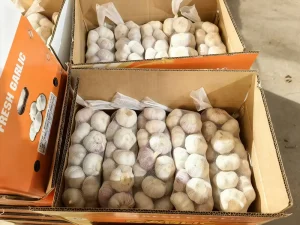
The export-grade garlic must meet the export standard of the country it will go to. Remember, “export-grade” is not one universal certification that applies everywhere. It must comply with the specific country’s requirements.
1- Chinese Standards for Garlic Quality and Pesticides
First of all, China has different standards for garlic and other foods. One important standard is GB/T 45244-2025, Garlic Grades and Specifications. It deals mainly with the quality, grades, and specifications of garlic. In this way, it helps buyers and exporters define what acceptable garlic should look like and how it should be classified.
Another standard is GB 2763-2026, Maximum Residue Limits for Pesticides in Food. This is the standard that sets limits for the amount of pesticide residue that can remain on or in garlic. As you know, farmers use various pesticides when growing garlic. However, the remaining amount must stay within the allowed limits.
2- Standard for Clean Growing and Handling
Garlic safety does not stop with pesticide use. Garlic can also become unsafe if it comes into contact with contaminated water, dirty equipment, or poor storage. For example, water used to grow crops is an important part of garlic safety. If agricultural water is contaminated, it will contaminate the entire crop. Also, after harvesting, the garlic must be handled safely. The chances of contamination also arise with poor handling and storage. So clean growing and handling standards help ensure that garlic is harvested with clean water and handled safely.
3- U.S. FDA Requirements for Imported Chinese Garlic
If Chinese garlic is sent to the United States, it must meet applicable U.S. food-safety requirements. The FDA explains that imported garlic must meet U.S. safety requirements. It also explains that garlic can be examined or inspected when necessary. U.S. importers also have to follow a rule called the Foreign Supplier Verification Program (FSVP). This means that companies in the U.S. that import garlic from China must verify that their foreign suppliers comply with U.S. food-safety rules.
Conclusion
In conclusion, China is one major exporter of garlic to many countries, including the USA. It follows strict safety standards from growing and harvesting to storing and exporting the garlic. The concerns about sewage irrigation, pesticides, and contamination should not be ignored. However, they also should not be turned into scary claims about all Chinese garlic.
China has standards for garlic quality, including rules for pesticide residues. When garlic is exported to the United States, it also meets applicable U.S. requirements. That’s why the safety question should be looked at from the farm all the way to the consumer. It should not be judged only by the label saying “China.”