As you know, garlic is needed in almost every home. It is widely used in cooking, and people also prefer it for its health benefits. China is a major garlic producer and accounts for a large share of global garlic demand. However, some people still ask: Is imported Chinese garlic irrigated with sewage?

Interestingly, this is a claim you’ll see on different social media posts. These claims have made garlic consumers alert about Chinese garlic and its quality and safety. Chinese garlic is not irrigated with sewage or other contaminated water and is safe to consume. In this article, I will discuss everything about Chinese garlic and its irrigation safety. So, let’s get started!
Is Imported Chinese Garlic Irrigated With Sewage?
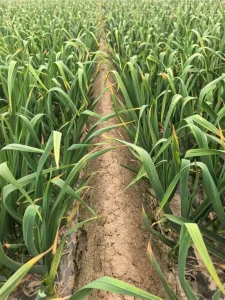
No. You cannot say that imported Chinese garlic is irrigated with sewage. It is a myth. There are concerns about the use of untreated wastewater in agriculture. But it does not prove that Chinese garlic is grown this way. Chinese growers follow safety standards from growing the garlic to its harvesting and storage.
China has set specific standards for irrigation. The farmers follow GB 5084-2021 standards, which concern water used for irrigation. This standard ensures treated or pure water is used to irrigate the crops, including garlic. Using untreated or sewage water for irrigation violates these standards and results in a fine. Almost all the farmers follow these standards, making Chinese garlic safe to consume.

The sewage claim has received attention due to statements regarding agricultural practices. However, this concern must not be turned into fact. As you know, China is a major garlic producer and exporter worldwide. Garlic for international markets undergoes farming, sorting, storage, and export.
The better way to judge Chinese garlic is to look at how it was produced and whether it meets the required safety rules. Chinese standards regulate areas such as pesticide residues and garlic quality. At the same time, garlic exported to countries like the United States also meets the country’s requirements. So you should not automatically assume that Chinese garlic is unsafe because of online claims about sewage.
Myth vs. Fact: Common Claims About Chinese Garlic
As I said above, there are different myths about Chinese garlic that are getting hype. This is very common in the United States, where customers are conscious about their health. Those myths make customers worry about consuming Chinese garlic. However, most of these myths are nothing but myths. Below is the table showing some common myths about Chinese garlic:
| Myth | Fact |
| Chinese garlic uses sewage. | No – Grown following GB 5084-2021 standard |
| Chinese garlic is unsafe. | It can meet safety standards. |
| White garlic is bleached. | No bleaching is done to alter garlic color. |
| Imported garlic isn’t tested. | No. Inspected and tested before exportation |
| Chinese garlic has harmful chemicals. | Residues are regulated. |

Where Did the Sewage-Irrigated Chinese Garlic Claim Come From?
The claim that Chinese garlic is irrigated with sewage did not come from evidence. Instead, it comes from concerns and reports about wastewater use in some agricultural areas. Social media posts and political statements later spread the claim more widely. The important point is to understand where the story came from.
Basically, this issue received more attention in the United States in 2024. This year, concerns about Chinese garlic were publicly raised by U.S. Senator Rick Scott. He called for an investigation into Chinese garlic. He raised questions about agricultural practices. As per U.S. Senator Rick Scott, Chinese garlic is grown using sewage water. However, Chinese officials rejected the allegations and called for a more rational approach to the issue.
This claim spread because of a real food safety issue. People started wondering whether Chinese garlic is safe to eat. No doubt, such water can contain harmful microorganisms and other contaminants. However, this general risk does not prove that Chinese garlic sold internationally is grown using sewage water.
How Is Garlic Irrigation Water Regulated?
Garlic irrigation water is regulated to ensure it does not introduce harmful germs or pollution into the crop. First of all, farmers use a suitable water source and avoid water contaminated with sewage or other harmful materials. They must ensure that the water used to grow garlic does not pose a food safety risk.
Secondly, farmers reduce the risk by choosing a safe water source and keeping the irrigation system clean. They remain careful about where the water comes from and how it reaches the garlic. For example, if dirty water comes into contact with the crop, it can carry harmful germs. This can contaminate the entire garlic crop.
Can Sewage-Irrigated Crops Be Detected?
Yes, possible sewage or wastewater contamination can sometimes be detected. However, this detection is not done by looking at the garlic alone. Instead, scientists do several tests to investigate sewage-irrigated crops. For example, they can take samples from the water source and test them for signs of sewage contamination. Soil from the growing area can also be tested. If wastewater has been used repeatedly, testing will find microorganisms or chemical contaminants.
It indicates a possible contamination problem. Garlic, including purple garlic, can be tested for microorganisms and chemical contaminants. However, finding a contaminant in garlic does not automatically prove that sewage was used. In the end, investigators compare results from the water, soil, and garlic. If the same contamination pattern is present in every sample, it indicates sewage contamination.
Conclusion

In conclusion, China is a hub for garlic production. It meets worldwide demand for garlic, thanks to its large-scale production and storage systems. Chinese garlic quality has always been consistent, which sets it apart. However, recent claims about Chinese garlic irrigation have confused everyone.
Some people have started to believe that Chinese garlic is irrigated with sewage and contaminated water. However, the reality is different: farmers must follow GB 5084-2021 standards. However, there may be individual cases in China where garlic is irrigated with contaminated water. This is not done on a large scale, which helps ensure the quality of Chinese garlic.