
Garlic might seem a simple kitchen ingredient. Right? However, in reality, it has become a key part of a vast global market that affects farmers, traders, and the food industry worldwide. Every year, millions of tons of garlic are grown, stored, and shipped across countries. But you might have noticed that in 2026, the garlic market is gaining special attention. Why? Because its prices are becoming more stable compared to previous years. The main reason for this stability is the strong, continuous supply from Jinxiang, China. Don’t know how? Worry not! In this guide, I will give you the 2026 garlic price trend update. Also, you will know how Jinxiang plays a role in keeping garlic available throughout the year. So let’s get started.
Global Garlic Market Overview

The global garlic market refers to the production, sale, and use of garlic worldwide. As I mentioned above, demand for garlic is growing each year due to its health benefits. It’s the main ingredient in the kitchen, and it is also used in medicine. Generally, garlic, such as purple garlic, is harvested once a year, but it is not sold all at once.
Instead, it is stored in special cold storage so it can be sold slowly throughout the year. That’s why many countries grow and export garlic worldwide. For example, if we talk about the estimated garlic production, it is about 28 million tons. However, a large portion is consumed locally, and about 4 to 5 million tons per year are exported.
China is the world’s largest garlic exporter and dominates the global market. Why? The reason lies in its strong storage system. For example, China produces about 75–80% of the world’s garlic. So it exports 2.5–2.6 million tons. This accounts for about 60% of world exports, making China, especially Jinxiang, the world’s largest garlic exporter.
Garlic Price Trends in 2026: What to Expect?

In 2026, garlic prices are expected to stay mostly stable with slight ups and downs. For example, export prices have ranged from $0.70 to $1.60 per kg in recent transactions. However, bulk white garlic wholesale prices are still in the lower range between $350 to $1,400 per ton. The reason for these stable garlic prices is a strong and steady supply, especially from Jinxiang, China.
Actually, Jinxiang has the best moderate environment for garlic growth. That’s why garlic is produced and cold-stored there in bulk. It continuously supplies garlic worldwide, preventing prices from rising too high. At the same time, if too much garlic is available (oversupply), sellers may reduce prices to attract buyers. So, in 2026, prices are not very high, mainly because the supply is strong.
1- Global Price Movement
In 2026, global garlic prices are mostly stable, with only small rises and dips. Prices are not increasing sharply because supply is strong, especially from China. At the same time, garlic prices are not falling much either. Why? Because demand is also steady from the buyers.
However, sometimes in the year, there might be a slight rise or drop in price. For example, during festivals or periods of higher export demand, garlic prices might temporarily rise. Likewise, when there is too much garlic available in the market (oversupply), the prices can drop slightly. Overall, the price movement in 2026 is balanced.
2- Wholesale vs Farmgate Prices
In the garlic market, there are two important price levels: farmgate price and wholesale price. The farmgate price is the price farmers receive when they sell garlic directly from the farm. It is usually lower. Why? Because farmers sell in bulk and there are no transport, storage, or export costs included. On the flip side, the wholesale garlic price is the price at which traders or middlemen sell garlic in large markets. This price is mostly higher than the farmgate price. The reason is that it includes additional costs such as storage, packaging, transport, and profit margins.
Quick Highlight: The difference between wholesale and farmgate garlic prices matters a lot. Suppose that when supply is higher, the gap is smaller because farmers earn less. However, when demand is high and supply is low, the price gap enlarges because wholesalers can charge higher prices.
3- Regional Price Comparison
Remember, garlic prices are not the same in every country. Instead, they vary from region to region due to differences in production levels, costs, and demand. Usually, the countries that produce more garlic have lower prices. China is an example of such a country, as it is the largest producer and exporter of garlic. Large-scale farming, strong storage systems, and efficient supply chains keep the garlic costs low there.
However, in India, garlic prices are also moderate because it is widely grown. But here, local demand is very high, which sometimes drives prices up. Similarly, in Spain, prices are higher than in Asia because production is smaller and labor costs are higher. But when we talk about the USA, the garlic prices are the highest of all. So, usually, it falls under the importer of garlic. So, due to additional costs such as transportation, storage, and import duties, garlic prices are very high.
Key Factors Affecting Garlic Prices in 2026
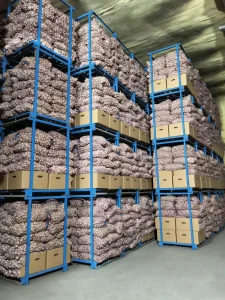
Garlic prices in 2026 do not change randomly. Instead, they depend on several factors that work together in the global market. Some of those factors push garlic prices up, while others bring them down. To better understand, let’s discuss some factors that strongly affect garlic prices.
-
Consumption Patterns
Consumption patterns mean how and where people use garlic in daily life. So, it is the first main factor affecting garlic prices. How? Actually, in 2026, people are becoming more health-conscious. Garlic is one of the main ingredients used to maintain health. So when garlic consumption patterns change, the prices also rise or fall.
-
Supply & Production Trends
These refer to how much garlic is grown and how much is available in the market. China produces the most garlic in the world. This large production helps meet global demand. As a result, garlic prices remain lower and stable.
-
Weather & Seasonal Impact
Garlic is a crop that depends heavily on the weather. It grows best in cool conditions with proper rainfall. If the weather is too hot, too cold, or too wet, it can damage the crop and reduce yield. As a result, demand increases while production decreases, potentially raising garlic prices.
-
Labor, Storage & Logistics Costs
Garlic prices are also directly related to labor costs. If labor costs increase, the overall cost of garlic production also increases. However, China is known for lower labor costs and higher garlic production. This keeps its prices almost stable in the global market. Similarly, if the costs of shipping, fuel, and packaging increase, garlic prices also rise.
-
Use of technology
Technology is playing an increasingly important role in the garlic industry. Now, in China, farmers are using modern irrigation systems to increase production. Similarly, they use storage technologies such as cold storage. This helps keep garlic fresh for a long time without damage. As a result of all this, garlic prices remain lower and stable in 2026.
Conclusion with Garlic Price Forecast for Late 2026
In late 2026, garlic prices are expected to stay mostly stable. It means the prices will not go very high or very low. The reason is that there is enough garlic available in the market; there will be no big shortage. Actually, garlic is harvested once a year. However, there is now a specialized cold storage technology that keeps garlic fresh year-round.
That’s why when a huge amount of garlic is present in the market, there are fewer chances that prices will rise. However, at some festivals, prices might rise slightly in some regions of the world. But the continuous supply from the garlic-rich city of Jinxiang will keep prices stable. So the movement is expected to be mild, not extreme.