
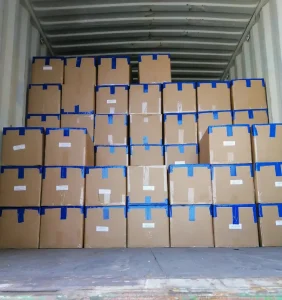
the-complete-chinese-garlic-supply-chain-journey
Garlic travels far to reach world markets. It moves from farms to storage centers and export ports.
China is a major garlic producer and supplies significant quantities to many countries. It has extensive farming regions and is well connected in global trade.
China’s garlic value chain includes production, cleaning, grading, storage, and transportation. Every step contributes to product quality and freshness.
Many buyers are also interested in China’s garlic export process. This involves careful handling, food safety checks, and international transport.
This article covers the entire Chinese garlic value chain. It covers garlic from Chinese farms to consumers worldwide.
Principais destaques:
- China dominates garlic production and has a strong farming and export network.
- The Chinese garlic value chain includes production, manufacturing, storage, packaging, and transport.
- Quality checks and proper storage support garlic exports and keep it fresh.
- Understanding garlic exports requires understanding China’s export process.
- Chinese garlic can meet global demand thanks to strong production and logistics systems.
How Does the Chinese Garlic Supply Chain Deliver Garlic From Farms to Global Markets?
Garlic begins on the farms in China. It then moves through several stages before reaching consumers worldwide.
The Chinese garlic supply chain involves garlic cultivation, processing, storage, packaging, and transportation. At each stage, exporters protect garlic quality.
First, farmers grow and harvest the garlic at the appropriate time. After harvest, farmers wash, sort, and package the garlic for storage.
Quality checks are performed before garlic leaves China. These checks ensure the product meets buyer needs and food safety regulations.
Garlic exports offer clues as to why China remains the world’s largest garlic producer. China’s garlic reaches many international markets thanks to its well-established supply system.
Each stage matters, from farms to global buyers. If done correctly, freshness can be maintained during transit.
Why China Is the World’s Leading Garlic Producer and Exporter
China is a significant player in the world garlic market. It exports garlic to many countries and accounts for a significant share of global production.
China’s garlic industry is strong, with extensive garlic-growing areas, skilled farmers, and strong processing networks. These factors contribute to a reliable supply chain for Chinese garlic.
1. China’s Role in the Global Garlic Export Market
China is the world’s largest garlic producer and exporter. It markets its garlic in Asia, Europe, the Middle East, and even North America.
Export volumes are extensive, and farming systems and trade are well developed. This helps Chinese suppliers meet global demand.
2. The Scale of Garlic Cultivation and Processing Networks
China has vast garlic growing areas. Many farms are processing garlic for domestic and export markets with local processors.
Garlic is harvested and then moves through cleaning, sorting, storage, and packing plants. These steps are key parts of the Chinese garlic supply chain.
3. Factors Behind China’s Dominance in International Garlic Supply
Several factors explain China’s success in garlic. Large production areas maintain a steady supply during the year.
China also has strong export-oriented processing facilities. They support garlic processing to meet different buyers’ requirements.
Global delivery is easier with efficient storage and transport systems. These systems help China maintain its position as the world’s largest garlic producer and a major garlic exporter.
4. Strong Export Experience and Market Connections
China has established long-term trade relations with some countries. Export companies understand quality and shipping requirements.
This experience helps develop garlic exports from China. Eases farm-to-market connections.
Understanding the Chinese Garlic Supply Chain From Farm to Export
Many links connect the Chinese garlic supply chain until garlic reaches international buyers. Each phase safeguards quality, freshness, and supply.
Whether it is farming or shipping, the entire process must be handled correctly. This well-managed chain allows China to remain the world’s leading garlic producer.
Step 1: Garlic Cultivation and Harvesting in Chinese Farms
Garlic cultivation begins with good husbandry. Farmers choose suitable land, plant garlic cloves, and monitor growth.
Harvest time affects garlic quality. Typically, farmers harvest when the bulbs are the proper size and maturity.
Farmers pick garlic and transport it for further processing. This is the beginning of the first stage of the Chinese garlic supply chain.
Step 2: Field Processing, Cleaning, and Manual Sorting
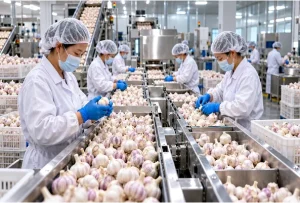
inside-a-garlic-processing-and-quality-control-facility
When fresh garlic is harvested, it still has soil and outer layers attached. Workers clean the bulbs before further handling.
Workers grade the garlic by size, appearance, and quality. Afterward, workers remove damaged bulbs.
Manual sorting separates garlic for different markets. It also improves consistency before storage and export.
Step 3: Quality Inspection and Grading Before Storage
Garlic undergoes quality checks before storage. Employees check quality for size, color, dampness, and condition.
Grading sorts garlic to meet buyers’ needs. It ensures exported products meet market expectations.
Food safety checks also help preserve product quality. These steps support dependable international trade.
Step 4: Cold Storage and Inventory Management
Garlic can be processed, but it still requires proper storage. Under controlled storage conditions, freshness can be preserved longer.
Temperature and humidity control minimize quality loss. This gives providers the chance to manage stock before delivery. [11][12]
Appropriate storage is a key component of garlic export. They keep garlic in good condition during long transport periods.
Step 5: Packaging and Preparation for International Export
Garlic is packed before export based on customer requirements. Packaging also helps to safeguard the product from handling and transport.
At this stage, the company prepares export labels and documents. Such records help ensure seamless cross-border operations.
Good packaging preserves garlic quality until it reaches customers.
Step 6: Temperature-Controlled Shipping and Global Distribution
The last phase is international transport. Exporters use ports and logistics networks.
To keep garlic fresh, exporters use appropriate transportation methods. This helps suppliers supply garlic to various markets.
Garlic is successfully exported from China thanks to the good logistics systems. They also help the global extension of the Chinese garlic supply chain.
Chinese Garlic Supply Chain: From Farm to Global Market
| Supply Chain Stage | Main Activities | Purpose |
| Farming and harvesting | Garlic cultivation and bulb collection | Produces fresh garlic supply |
| Field processing | Cleaning, trimming, and sorting | Removes unwanted material |
| Quality inspection | Size, appearance, and safety checks | Ensures product quality |
| Cold storage | Temperature and humidity control | Maintains freshness |
| Embalagem | Export packing and labeling | Protects garlic during transport |
| International shipping | Sea transport and distribution | Delivers garlic to global buyers |
How Garlic Is Exported From China to International Markets
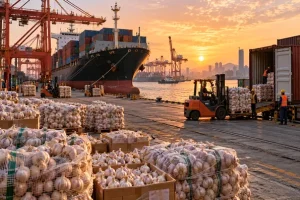
from-chinese-port-to-global-markets
There are numerous steps in the export process of garlic. Each step helps move garlic from China to buyers worldwide.
Documentation, safe handling, and shipping are essential for the Chinese garlic value chain. These measures help preserve garlic quality during export.
1. Export Documentation and Compliance Requirements
Garlic must meet documentation requirements before export. These documents will contain product information and shipping details.
Common documents include a quality certificate, packing list, and invoice. They help meet import requirements in different countries. [6][7]
Food safety checks are also essential. Following proper handling rules, exporters do their utmost to maintain garlic quality.
2. Logistics Planning and International Shipping Processes
When shipping garlic, careful planning is essential. The exporter selects appropriate transport modes and routes.
Sea transport is the most common way to ship garlic. Garlic should be protected during long trips, and proper packing helps protect it.
During shipping, storage conditions are also important. Garlic keeps longer when temperatures are controlled. [9][10]
3. Delivery to Global Buyers and Retail Markets
Upon arrival, garlic is taken to the local buyers. Importers and retailers then import it and sell it to customers.
A strong export system helps maintain a steady supply. It enables Chinese garlic to enter many countries.
This is the process of exporting garlic from farms to export markets. It also illustrates the involvement of the Chinese garlic supply chain. [2][3]
4. Meeting International Buyer Requirements
Buyers may have different requirements for product size and packaging. Exporters cultivate garlic to meet these requirements.
Quality checks help ensure shoppers receive the products they expect. This helps China maintain its role as the global Garlic producer. [2][4]
How Quality Control Maintains Reliability in the Chinese Garlic Supply Chain
Quality control is significant at every stage of the garlic trade. It maintains freshness, safety, and product quality.
The Chinese garlic value chain includes various checks, from farm to export. These measures ensure Chinese garlic meets global buyers’ requirements. [6][7]
1. Maintaining Freshness Through Proper Storage Conditions
After harvesting, garlic requires proper storage. Proper storage helps reduce the rate of quality deterioration.
Garlic can be stored under controlled temperature and humidity conditions to ensure protection. They also help maintain freshness before shipping. [11][12]
Proper storage is a major factor in garlic export. This helps maintain garlic quality during long transit times.
2. Meeting International Food Safety and Quality Standards
Garlic exporters must comply with all food safety regulations. These rules ensure garlic is safe for buyers.
Quality checks can include product inspection, hygiene checks, and proper handling. [6][7]
By adhering to these standards, you can help establish trust with foreign customers. It also helps ensure stable garlic exports from China.
3. Ensuring Consistent Supply for Global Customers
The world needs a consistent garlic supply year-round. Strong farming and storage infrastructure supports this.
As the world’s largest garlic producer, China has a large production network. [1][2]
Exporters need a reliable supply chain to ensure timely garlic delivery. It also strengthens China’s position in the global garlic market.
4. Maintaining Product Quality During Transportation
Garlic can be transported long distances to buyers. Proper packing and transport methods minimize damage.
Exporters use appropriate shipping practices to maintain garlic quality. These steps help facilitate the supply chain of Chinese garlic from farm to international market. [9][10]
What Makes Chinese Garlic Supply Chains Competitive in Global Trade?
Over many years, China has built a strong garlic export system. China’s garlic value chain refers to the links among farms, processors, storage facilities, and international buyers.
One major advantage is China’s ability to produce garlic in large quantities. China remains the world’s largest garlic producer because of its extensive agricultural base and strong agricultural networks. [1][2]
Another factor is efficient processing. Garlic goes through cleaning, sorting, storing, and packing processes before export.
Modern storage systems help ensure garlic quality. They enable suppliers to manage supply and provide fresh products to different markets. [11][12]
China also has extensive export experience. Suppliers understand other countries’ requirements and shipping processes.
This is one reason China exports garlic to many countries. A well-organized supply chain helps maintain supply and product quality.
Chinese garlic production is globally competitive because of robust production, processing, and logistics systems. [2][4]
Perguntas frequentes:
1. Why Is China Considered the World’s Largest Garlic Producer?
Because of its large-scale garlic production, China is the world’s largest garlic producer. It has many farming zones and production systems. [1]
China has also established processing and export networks. These systems facilitate transporting garlic from farms to international buyers.
2. How Does Garlic Get Exported From China to Other Countries?
Garlic export involves several steps. Garlic is washed, graded, packaged, and readied for shipping.
Exporters must complete the necessary documents before shipment. The garlic is then transported through various ports for sale to buyers in other countries. [6][9]
3. How Is Garlic Stored Before International Shipment?
After processing, garlic is stored under controlled conditions. Suppliers maintain freshness by controlling temperature and humidity.
Good storage reduces deterioration before export. It also helps suppliers manage garlic supply across seasons. [11][12]
4. What Makes Chinese Garlic Competitive in the Global Market?
Large farms, processors, and logistics support the Chinese garlic value chain.
These systems help suppliers ensure a continuous supply and meet buyers’ requirements. This supports China’s position in the global garlic market. [2][4]
5. How Long Can Exported Garlic Remain Fresh During Transportation?
If stored properly, garlic can stay fresh for a long time. Proper temperature, humidity control, and packaging protect quality.
Storage time is dependent on handling and transport conditions. Good post-harvest practices preserve freshness during long shipments. [11][12]
Considerações finais!
Many steps separate garlic from the world market. Each step helps secure quality and supply.
China’s garlic supply chain includes farmers, processors, storage facilities, exporters, and buyers. This system will help China maintain its position as the world’s largest garlic producer. [1][2]
Every step matters, from farming to shipping. Proper handling, storage, and transport help garlic stay fresh.
Understanding garlic exports shows the effort behind the global garlic trade. With an excellent supply chain, Chinese garlic can be sold to customers worldwide.
China’s success comes from large-scale production, strong processing, and efficient export systems. These factors will help it remain competitive in the global garlic market. [2][4]
Entre em contato conosco for reliable Chinese garlic supply solutions. We are here to help you find high-quality garlic products with smooth export support.
Referências:
- Food and Agriculture Organization of the United Nations (FAO). “FAOSTAT: Crops and Livestock Products” — Garlic Production Data.
- International Trade Centre (ITC) Trade Map
- United Nations Comtrade Database. International Trade Statistics — Garlic HS Code 070320.”
- U.S. Department of Agriculture (USDA). Garlic: World Markets and Trade. Foreign Agricultural Service.
- Food and Agriculture Organization of the United Nations (FAO). “The State of Food and Agriculture: Food Supply Chains and Value Systems.”
- Codex Alimentarius Commission. “General Principles of Food Hygiene (CXC 1-1969).”
- International Organization for Standardization (ISO). “ISO 22000:2018 Food Safety Management Systems — Requirements for Any Organization in the Food Chain.”
- International Plant Protection Convention (IPPC). “International Standards for Phytosanitary Measures (ISPMs).”
- United Nations Conference on Trade and Development (UNCTAD). “Review of Maritime Transport.”
- International Maritime Organization (IMO). Guidelines for the Transport of Perishable Food Products.
- Kitinoja L, Kader AA. “Small-Scale Postharvest Handling Practices: A Manual for Horticultural Crops.”
- Postharvest Technology of Horticultural Crops.
- World Health Organization (WHO). “Food Safety: Key Facts.”
- International Fresh Produce Association (IFPA). Global Fresh Produce Supply Chain Resources.
- Ministry of Agriculture and Rural Affairs of the People’s Republic of China. China Agricultural Statistics and Garlic Production Information.
- National Bureau of Statistics of China. “China Statistical Yearbook — Agriculture and Crop Production Data.